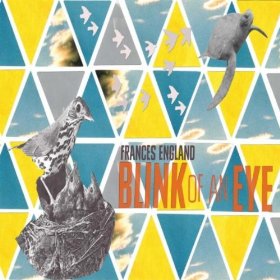
Review: Blink of an Eye - Frances England

I've had the occasional thought over the past few years about what kids music might sound like a few years from now.  What happens when the kids who grew up connected online and encouraged in a DIY world become parents themselves?  What happens when mass-market TV gives way to a million tiny screens (or at least a thousand different programmers)?  When parents have no idea who Pete Seeger is (but have memories of that Lumineers concert they went to once)?

I don't think Frances England's fourth album Blink of an Eye is the answer to any or all of those questions, but it is an answer that presages it.

If on her previous album Mind of My Own , England cranked up the volume and the energy, on this new recording, the San Francisco artist dials it all back a bit.  It's not that England has abandoned melody -- the title track which leads off the album, for example, has a lovely wordless ending to the chorus (helped no doubt by the presence of Elizabeth Mitchell and Caspar Babypants on the track).  But it's all very jangly -- producer Dean Jones and England employ a ton of different percussive instruments throughout the album (I'm pretty sure "Move Like Saturday Night" uses even more different items for percussion, if that's possible).

Although the production values are much higher than those on England's debut Fascinating Creatures, famously recorded as a preschool fundraiser and the first time she'd made an album, the impulse is the same.  It's a very-DIY sound equal parts folk and indie rock, put together with craft and care.  "Little Wings," even though it moves forward propulsively on Morgan Taylor's guitar work, is a quiet piece.  On a number of the songs, England chooses to deemphasize her vocals -- the result on those tracks is impressionistic in effect, the aural equivalent of that collage of an album cover.

And that's really what England is aiming for (and succeeding) lyrically.  Many of the songs are fleeting glimpses -- memories -- of family life and parenthood.  "Blink of an Eye" is the most obvious, but it's the dreamy "Salt Water Spin" and "Look How the Light Dances with Trees" that feel like England telling herself -- and by extension her family and us, the listeners -- "Don't. Forget. This."

This album will be most appreciated by kids ages 5 through 9, though its mellow nature will have a broader appeal for quiet-time spins.  You can listen to the whole thing at England's music page

Frances England has carved out a career making very personal music for families -- more so than many artists, I believe she thinks specifically about her own family as the audience.  This approach -- challenging oneself to learn new skills and then reflecting their life outward using those newfound skills -- is one area where I think kids music will evolve.  Maybe even one day a couple decades from now a 28-year-old new parent will remember those albums they listened to on "CD" or an "iPhone," pick up an instrument (or a computer), and try to convey those same dreamy feelings to their own child.  One can hope, anyway.  Highly recommended.

 Note: I received a copy of the album for possible review.

Video: "Day You Were Born" - Frances England

Oh, this is something beautiful.  It's a stop-motion collage video for Frances England's "Day You Were Born" off her brand-new album Blink of an Eye .  The video is courtesy of the artist Antonina Clarke, and it captures England's aesthetic (and the song's tone) perfectly.  (Hat tip: Apartment Therapy , who world-premiered the video.)

Frances England - "Day You Were Born" [YouTube

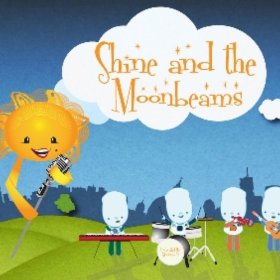
Hello, NPR Shine and the Moonbeams Fans (or Future Fans)

So maybe you heard a voice on NPR on this afternoon's All Things Considered.  Maybe it was my slightly high-pitched voice, but far more likely it was the powerful, soulful voice of Shawana Kemp, the vocalist and songwriter behind Shine and the Moonbeams.  I reviewed the debut album from the band, and now you want to know more.

Well, that's Shine and the Moonbeams' site up there and, um, I'd start there.  If you're new to this site, welcome, there's lots of reviews to explore, even some podcasts via the links to the right. 

Monday Morning Smile: Thoughts for Oddballs

Usually these Monday Morning Smiles involve some sort of visual or aural treat as an introduction to the week.  (I say that as if the MMS is a thing which, recently, it hasn't been.)  This week, I wanted to draw your attention to a piece written by Linda Holmes at NPR's Monkey See website.   I've always enjoyed Holmes' writing, which makes me smile, laugh, and (when it's called for) think.  And I don't say that just because she's a distant (very distant) NPR cousin of mine.

A few weeks back, Holmes wrote a piece titled "Hey, Kid: Thoughts For the Young Oddballs We Need So Badly," which was an open letter to "young creative weirdos" (her phrase, not mine, though I endorse the term) encouraging to take heart and providing some advice for navigating their tween and teen years in making art.

Unsurprisingly, a lot of commenters -- like me -- noticed the relevance of the advice to creative weirdos of any age (and Holmes herself in a subsequent comment admitted that it was the type of advice she thought of in her '30s).  Advice like learning to distinguish between feedback and criticism and finding your "pod" is relevant to any creative group (like, say, kindie musicians). 

So, go up to that link and read it to your kid and send it on to your favorite kindie musician. 


Weekly Summary (8/5/13 - 8/11/13)

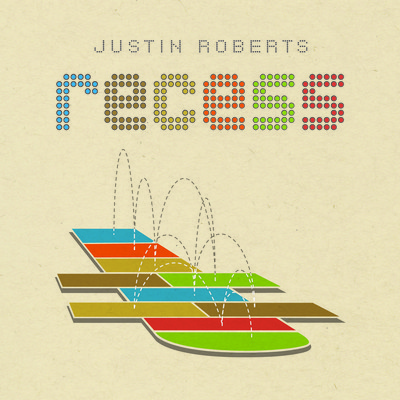
Review: Recess - Justin Roberts

I recently watched Jiro Dreams of Sushi , a 2011 film about Jiro Ono, an 85-year-old sushi maker whose small restaurant in the basement of a Tokyo office building has received three Michelin Guide stars, signifiying it as one of the best restaurants in the world, one worth visiting a country for solely to eat at.  It's a beautiful movies in many different ways, and makes many points about craft, dedication, and skill.  (It also will make you hungry for sushi, but that's not relevant here.)

Watching the movie came at a fortuitous time for me as a reviewer, because I'd been banging my head for weeks  -- virtually -- trying to figure out how to write a review of Justin Roberts' latest album, Recess.  It is, as I've noted before, difficult to write about musicians who consistently release high quality music for families.  How do you write "this is great" without boring your audience (or, almost as importantly, yourself)?  And with Jiro , the answer came to me -- through the prism of the difficulty of maintaining one's craft over an extended period of time.

Justin Roberts released his first album for kids, Great Big Sun, in 1997; this new album is his ninth.  There is not a kids musician today who has a discography of original music for kids and families as consistently great and large as Roberts has produced over the past 16 years.  Other have a great discography featuring reinterpretations of classic songs or have fewer albums or written over a shorter period of time, but let's stop here to think about the dedication to craft his career has entailed. Sixteen years of crafting songs with a singular audience in mind.  Roberts didn't go full-time to kids music until the early 2000s, and he's now putting together a couple kids' books, but for the most part, that's more than 15 years doing a single thing over and over.  Is it any wonder that Roberts' songwriting skills are so sharp?

Many of Roberts' songwriting hallmarks are on display in Recess, starting with the irresistible title track.  Child narrator with enthusiasm on full display?  Check.  Internal rhymes?  Check.  Spelling?  Check.  (OK, I wouldn't necessarily suggest that spelling is one of Roberts' hallmarks.)  All that wrapped in powerpop that seems that seems like it can't get any more powerpoppy until he finds the amp that goes to 11.  It's a great song, among Roberts' best.  (Critic's obligatory fawning praise for producer Liam Davis and the whole Not Ready for Naptime Players, who bring Roberts' songs to vibrant life?  Check.)

His songwriting skills are such that at this point he's willing to tackle one of the most obvious (and usually tired)  subjects in kids music -- princesses and girls wearing pink -- and he completely turns it on its ear, offering up a song that many adult listeners will hear as an allegory about how it just takes a handful of people changing their attitude to overturn outdated ways of thinking ("It seems so obvious to us, it's hard to understand the fuss").

As the album proceeds, the longtime Roberts fan will hear echoes of previous songs -- I can't listen to "Hopscotch" without thinking of "We Go Duck" and their celebrations of childhood games, or "I'll Be an Alien" without several songs about kids dreaming of their escape like "Backyard Super Kid."  There are the songs that serve up an entirely different musical interlude mid-stream such as "Every Little Step."  And, yeah, there seems to be a direct line (in reverse) from the narrator of "Check Me Out, I'm at the Checkout" to that of "Meltdown!"

To me, the way this album differs from its predecessors is Roberts' increased emphasis on songs about parenthood.  In the past, those celebrations of parenthood have been more oblique (the sideways glance at the parents in "Cartwheels and Somersaults," still my all-time favorite song of his).  And on Recess, songs like  "School's Out (Tall Buildings)" take that same approach.  But a song like "Every Little Step," though ostensibly (and I'm pretty sure in actuality) about dog ownership by the dog, is easily heard as a celebratory song about the parent-child relationship.  "We Got Two" is a song about twins, but from the parent's perspective.  "Red Bird" carries on Roberts' tradition of ending his album on a gentle note, but if you take a step back, it's hard to believe the journey the album takes from the album opener to the string-assisted ballad at the end.  Yet they seem part of a whole, enthusiasm yielding to unconditional love and wonder.

Like the rest of his discography, the album is most appropriate for kids ages 5 through 9, though he obviously has wider age appeal.  Roberts has decided to limit his music for digital streams on services such as Spotify, and his taste for the analog extends to the gorgeous packaging for the CD, which includes a lovely cover courtesy of Ned Wyss.  Wyss also designed the secret robot in the packaging, who is your child's (and your) guide through a secret website featuring activities for your child and a treasure trove of JR rarities for, well, probably you.  (And me.)

It's actually those rarities such as a 2002 live recording of "Yellow Bus" that bring us back to the beginning, to the importance of craft. Even "Yellow Bus," a classic, fun and funny song in its own right, might only be the sixth or seventh best song on Recess.  On the one hand, in its recapitulations of themes and styles I could say that Justin Roberts' career up to this point has led him right here to this album.  But that might suggest some sort of finality to the journey, and the thing that I've realized is that he's going to continue crafting great music.  Recess  is a great album, Roberts' best (though that's a close call, to be sure), but I also know that it's very likely that one day he will release something even better.  Highly recommended.

 [Note: I received a copy of the album for possible review.]